
Firewood Delivery in Durham & Roxboro: Local Hardwood, Properly Seasoned
Good firewood is not complicated. It is the right species, split, and dry. Most of the wood sold around here misses on at least one of those, so here's how to tell.
What's In The Pile
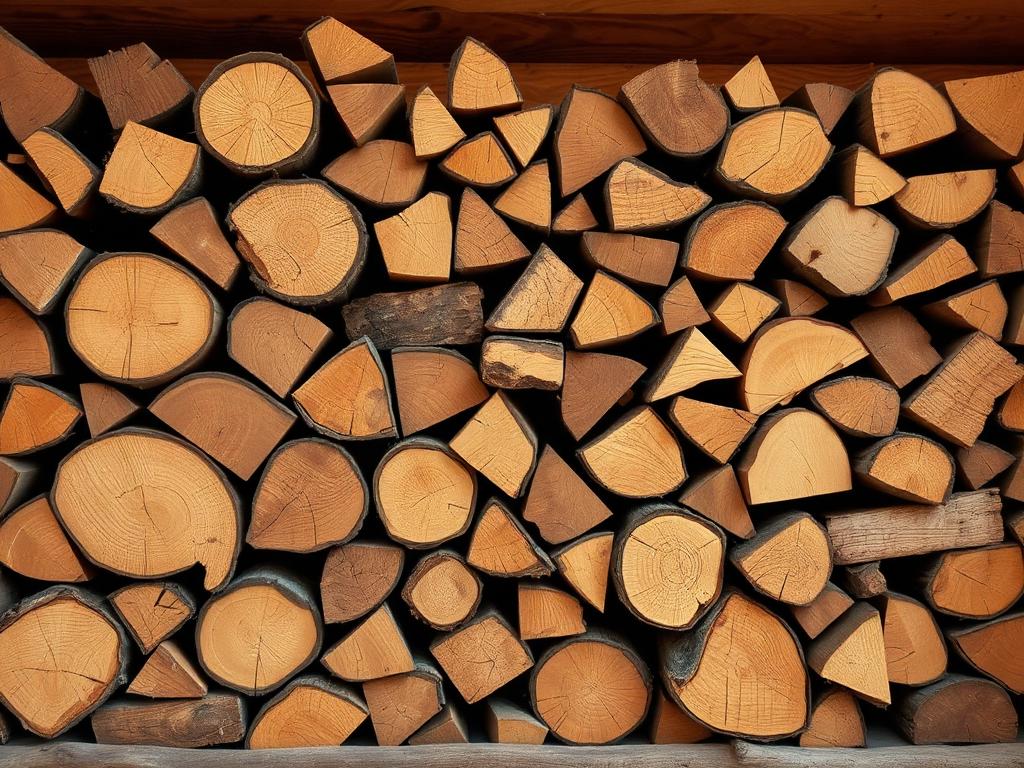
Our wood comes off jobs across the Triangle and the Lake Country, so it is a local hardwood mix — mostly oak, with hickory and maple in the rotation. They are not interchangeable. Oak is dense and burns long and steady, which is what you want banked in a stove on a cold night, and it is also the slowest to dry. Hickory burns hotter than just about anything else in the yard and leaves good coals, which is why the smokers and pizza-oven folks ask for it by name. Maple lights easier and gives you a quicker, brighter fire — it is the wood you want at the front of a cold stove before you put oak on it. A good stack has some of each.
Seasoned Versus Green — The Whole Ballgame
A freshly cut oak round is close to half water by weight. Burn that and most of your heat is spent boiling it off instead of warming the house: weak flame, smoke, a stove that will not come up to temperature, and unburned volatiles condensing in the flue as creosote. Creosote is what chimney fires are made of. Dry wood — generally in the neighborhood of 20 percent moisture or below — lights fast, burns clean, and puts its energy in the room. Getting there takes time after splitting, not before: oak commonly wants a year or more stacked and open to the air, while maple and other lighter hardwoods can be ready in a season. Wood dries through the split faces, so a round left whole barely dries at all.
Check It Yourself In Ten Seconds
Pick up a piece. Dry wood is noticeably lighter than it looks. Look at the cut end for radial cracks running out from the center — checking like that is the wood shrinking as it dries, and green wood does not have it. Knock two pieces together: dry wood gives a sharp crack, green wood gives a dull thud you can hear the water in. Look at the ends for a grey, weathered face rather than bright fresh color, and split a piece if you want certainty — the inside of a dry split feels dry to the back of your hand, not cool and damp. If somebody hands you heavy, bright, thudding wood in November, you are buying next year's firewood at this year's price.
Why Pine Stays Outside
The Piedmont is covered in loblolly and shortleaf pine, and there is always somebody offering it cheap. Keep it for the fire pit and the campfire. Pine's resin content and low density mean it burns fast, throws sparks, and deposits far more in a flue than hardwood does — a bad combination in an indoor fireplace or a wood stove you run all winter. It is fine outdoors where sparks and smoke do not matter and nobody has a chimney to keep clean. Indoors, burn hardwood.
What A Cord Is, Honestly
A full cord is a defined measure: a stack 4 feet high by 4 feet deep by 8 feet long, 128 cubic feet including the air between the pieces. That is the only unit with a fixed legal definition. A face cord or rick is 4 feet high by 8 feet long by however long the pieces are cut — usually 16 inches, which makes it about a third of a cord. That difference is where most firewood disputes come from. Two tips: get the unit in writing before delivery, and stack it when it arrives so you can measure it. A tidy stack does not lie. If you ever think a delivery came up short, say so — a load stacked and measured settles the question in five minutes.
Delivery, And Where It Ends Up
We deliver firewood up to 15 miles around Durham. If we cut your tree down for you, the firewood is included — we bring it with us when we haul the wood off the job. For standalone firewood orders, the standard drop is a dumped load in the driveway or wherever the truck can safely back to — tell us the spot when you order, and let us know about soft ground, a steep drive, or a gate we would need to fit through. Stacking is available as an add-on; ask when you order and we will price it with the load.
Stack It Right And It Stays Right
Get it off the dirt. Pallets, a couple of runners, scrap 2x4s — anything that breaks contact with the ground, because soil wicks moisture straight back into the bottom row and that is the layer people find rotten in February. Cover the top only. A tarp wrapped down the sides turns your stack into a sweat lodge and keeps it wet; you want rain off the top and air moving through the sides. Face the stack to the sun and the prevailing breeze if you have the choice. And keep the pile away from the house and the crawlspace — firewood hosts carpenter ants, spiders, and beetles, which is also why you only bring in what you will burn that day rather than stacking a week's worth by the hearth.
Order Before You Need It
The best time to buy is late summer or early fall. Supply is good, you have your pick of the split, and anything that needs a few more weeks of drying gets it in your yard instead of ours. By the first hard freeze the phone gets busy and the dry stock moves first — which is exactly when green wood starts changing hands. If you burn every winter, buy a season ahead and you will never think about it again.
What's included
- Local hardwood mix — oak, hickory, maple
- Split to burnable size for stoves and fireplaces
- Seasoned before it goes out, not sold green
- Firewood included when we remove your tree
- Delivery up to 15 miles around Durham
- Unit confirmed in writing before the truck rolls
Who this is for
- Wood stove and fireplace households
- Smokers, pizza ovens, and outdoor kitchens
- Cabins and rentals around Kerr Lake and Lake Gaston
- Anyone who got burned by a green load last winter
What to expect
- 1Call with your unit, your species preference, and your drop spot
- 2We confirm quantity, price, and access before scheduling
- 3Load delivered to the spot you picked
- 4Stack it off the ground, covered on top, and it is ready when you are
Firewood Delivery & Splitting across the Triangle
See the work up close.
Firewood Questions
How much wood do I need for a winter?
It depends on how you burn. An occasional weekend fireplace household in central North Carolina often gets through on well under a cord, while someone heating a good part of the house with a stove through January and February can move several. If it is your first year, start with a cord and see how fast it goes — you will know by New Year's.
Is the wood ready to burn the day it shows up?
That is the intent — we sell seasoned wood, not green wood with a story attached. Species and how long it has been split both matter, and oak takes the longest, so ask what is in the load when you order. Then check it yourself with the weight, cracks, and knock test above. We would rather you verify than wonder.
Do you stack it, or is it dumped?
The standard delivery is a dumped load at the spot you choose. Stacking is available as an add-on — ask when you order and we will price it with the load. Either way, tell us where you want it before the truck arrives; moving a cord twice is nobody's favorite afternoon.
How far out do you deliver?
We deliver firewood up to 15 miles around Durham. If we cut your tree for you, the firewood is included and comes with the job. If you are on the edge of the 15-mile radius, call and ask — the answer usually depends on the size of the order and what else is going that direction that week.
Can I get less than a full cord?
Ask when you call. Partial quantities are often workable, and the important thing is that whatever you order is described in a real unit — a half cord or a face cord with the piece length stated — rather than 'a truckload,' which means nothing and is where people get shorted.