

Stump Grinding in the Triangle: Depth, Chips, and Access
A stump is a simple problem with a few specific variables. Get those right and the spot looks like nothing was ever there.
The short version
- Grinding Or Excavation
Grinding uses a rotating wheel with carbide teeth to chew the stump and the flare roots into chips, below grade, in place. It is quick, it does not tear up the surrounding lawn, and it leaves the deep root system in the ground to decay on its own. Excavation is a different animal — a machine pulls the whole root ball out, which means a crater, heavy equipment tracks, and a fill-and-regrade afterward. It costs considerably more. You need it when something structural is going in that spot: footings, a pool shell, a retaining wall. For lawn, beds, or a replanting a few feet over, grinding is the right call almost every time.
- How Deep Depends On What Goes There Next
Depth is not a bragging number, it is a spec driven by your plan. Putting sod or seed back over it? Six to eight inches below grade is plenty for turf roots and a mower. Planting a new tree nearby? We go deeper and wider so there is real soil volume, and we still recommend offsetting the new tree a few feet rather than dropping it straight into the old root plate. Building a patio, a shed pad, or setting a fence post through the spot? Tell us before we start, because that needs the grindings out and clean fill in, not chips left to settle. Tell us the plan and you get the right hole.
- The Chips Are The Part People Forget
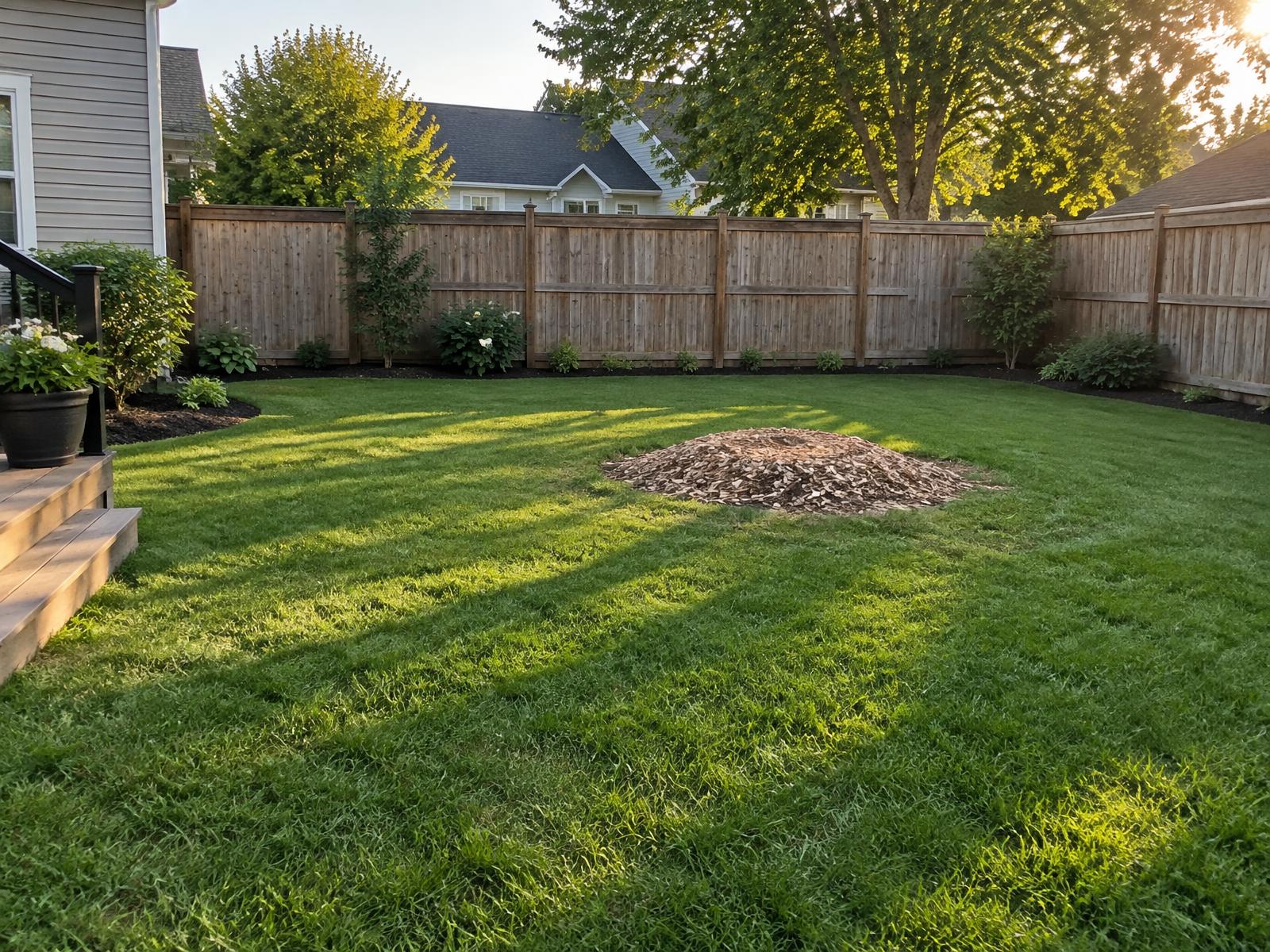
Grinding a stump produces far more volume than the stump appeared to hold — wood chips fluff up, and a big oak stump can throw a mound several feet across. You have three choices. Leave the mound and it settles over months into a low crown you can top with soil. Rake the chips into your beds as mulch, which works fine as long as you keep them off plant stems. Or we haul them off and backfill the void with topsoil so you can seed right away. Backfilling is the only option that gives you a flat, plantable surface the same day.
- Why A Left Stump Turns Into A Bigger Bill
Decaying stumps are a food source. Carpenter ants colonize soft wood and termites take advantage of it, and neither one respects the distance between the stump and your crawlspace. Armillaria root rot lives in dying root systems and moves through root contact to healthy trees nearby, which is a real concern when the stump sits in a stand of oaks. Add the mower blades you will lose to hidden flare roots and, on sweetgums and Bradford pears, the ring of suckers that comes up out of the root collar every spring and never quits. Waiting also means more root spread to grind.
- What The Machine Needs From Your Property
Access decides half of this job. Our walk-behind and self-propelled grinders need a clear path to the stump, and gate width is the usual sticking point — measure the narrowest point of your gate or side yard and tell us the number when you call. Slopes matter: a grinder works across a moderate grade but there is a point where it stops being safe. And the Piedmont's red clay turns greasy after a rain, so we may push a job a day or two rather than rut your yard. Fences can often be panel-lifted and reset when there is no other way in.
- Locate Before We Grind
Grinder teeth do not care what they hit. Irrigation lines, invisible fence wire, low-voltage landscape lighting, gas services, and buried water and electric all live in the top foot of soil where the grinding happens. Public utilities get located through North Carolina 811 before we run the machine. Private lines — the run from the meter to a detached garage, your sprinkler zones — do not get marked by 811, so you are the source for those. Point them out and everybody has a better day.
What's included
- Stump and accessible flare roots ground below grade
- Depth set to your plan: turf, planting, or hardscape
- Chips mounded, spread as mulch, or hauled with topsoil backfill
- 811 locate before the machine runs
- Area raked level and walkable before we leave
What to expect
- 1Measure access and confirm gate width and slope
- 2Locate marked; private lines pointed out by you
- 3Grind, then handle the chips the way you chose
- 4Rake, blow the hardscape, walk it with you
Who this is for
- Stumps left behind by another crew or a storm
- Yards being sodded, seeded, or re-landscaped
- Sweetgum and Bradford pear stumps that keep suckering
- Sellers clearing hazards before a listing
Stump Grinding & Removal across the Triangle
See the work up close.
Stump Grinding: Practical Questions
How long does one stump take?
Most residential stumps are a job measured in tens of minutes once the machine is at the stump — a small dogwood is quick, a wide oak flare with buttress roots takes considerably longer. The variable that actually swings the day is access, not the stump itself.
Can I plant a new tree right where the old one stood?
You can, but it is not ideal. Even a deep grind leaves woody debris and a chip-rich pocket that ties up nitrogen as it decays, and the old deep roots are still down there. If you want a tree in that area, shift it a few feet and give it clean soil. If it has to go in the exact spot, plan on excavation and imported soil.
Will the roots keep growing after the stump is ground?
No. Once the stump and root collar are gone, the root system has no way to make food and it stops growing, then slowly decays in place. The exception is species that sucker from the roots themselves — that is why we grind the flare out rather than just skimming the top.
What if the grinder physically cannot reach the stump?
It happens — courtyards, fenced back yards with a thirty-inch gate, stumps on a steep bank. Options are lifting a fence panel, coming through a neighbor's yard with permission, hand-cutting the stump as low as possible as an interim, or bringing different equipment. We will tell you honestly which of those applies before you pay for a trip.
Can you grind when the ground is wet?
Sometimes, and sometimes we should not. Clay soil after a hard rain compacts and ruts under the weight of a grinder, and the repair to your lawn can outlast the stump problem. If the yard is soft, we would rather move the appointment a couple of days.